Colourful Woman Wednesday: Sapna Lal

This is the third post in our “Colourful Woman Wednesday” series, which features stories of colourful women surviving and thriving. If you’d like to share your story, or nominate a colourful woman for this feature, email us or get in touch via Tumblr,Twitter or Facebook.

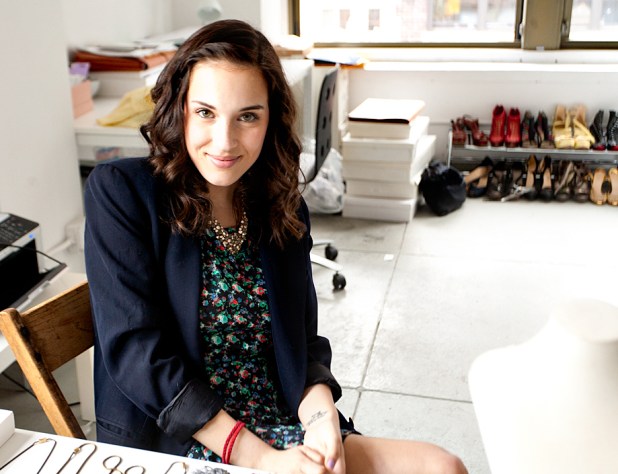
Sapna Lal is the president and founder of The Lal Firm, and specializes in entertainment law.

Here she talks to The Coloured Collective about what makes her a colourful woman, some of her inspirations, and her message for all of our readers:

What makes me a colourful woman?

My Universal Spirit and ability to love all people, cultures and religions beyond color, race or gender. I work on improving myself each day spiritually, mentally and professionally by meditating to instill balance and peace within. I look at the world – especially those who have hurt and disappointed me, with compassion and I practice non-judgment daily.

Most importantly, I am a woman of my word…having integrity is key to achieving true greatness.

Some of my colourful inspirations are Oprah, Deepak Chopra, Dr. Wayne Dyer, Maya Angelou, His Holiness The Dalai Lama, Marianne Williamson, Ghandi, Stevie Wonder, Bob Marley and President Obama.

Have patience. Be persistent. Always persevere (the three P’s). If you truly want something, believe in it. Have faith. Let go of fear and doubt. All things happen in due time. Look at the lessons all around you. Be humble and acknowledge that there is always room to grow and be better. Give without expecting anything in return. Remember your greatness. You were born to shine and excel. And when God (Jesus, Laxshmi, Buddha, Allah, whomever is your higher spirit) says no…say THANK YOU.

Thank YOU Sapna!

Mind if I play my music?

This is a question that I have never asked at the office.

(Context: I work in an amazing, open-plan space with tremendous colleagues who have excellent and varied musical tastes. I know this because said office is equipped with an AirPlay setup that allows us to pipe our Spotify, iTunes, Pandora and turntable.fm playlists to a speaker system for shared rocking out)

But my music? I’ve never asked to stream my (incredibly extensive) Damian Marley playlist, or my (even more extensive) collection of non-soca music made by Caribbean artists.

If my fear is that Damian and Mangoseed are somehow not “office appropriate” (what does that even mean? And what about the recent all-day Wailers-fest we enjoyed, courtesy a colleague who’d watched the Marley documentary over the weekend?), why then don’t I even cue up the Mumford & Sons or the Florence and The Machine playlists?

There are a few things going on here.

One, I have an uneasy relationship with “Caribbean” me, at least and especially when I am in decidedly non-Caribbean contexts. I’ve already got the hair, the head wraps, the WTF accent and that whole being-brown thing. Do I also need to highlight my predilection for soca, dub, dancehall and related musical forms? For one of the reasons why this is even a thing: see reactions to Rihanna in Carnival costume, and add a hefty dose of my must-bust-stereotypes syndrome.

Two, my relationship with music is intensely personal, and I am averse to (indeed, tending toward incapable of) intermingling the personal and the professional.

I regularly listen to Damian at work – safe, secure and inviolate in the castle of my headphones.

And that’s ok.

Colourful Woman Wednesday: Brianne Garcia

This is the first in a series of “Colourful Woman Wednesday” posts, which will feature stories of colourful women surviving and thriving. If you’d like to share your story, or nominate a colourful woman for this feature, email us or get in touch via Tumblr, Twitter or Facebook.

Introducing: Brianne Garcia, colourful woman.

Brianne Garcia, founder of Parceld


Brianne is the founder of PARCELD, a fashion startup that aims to take the hassle out of the hunt. Brianne is also a 2012 fellow at the CUNY/Tow Knight Entrpreneurial Journalism Program, and one of two winners of the inaugural J. Douglas Creighton scholarship.

Here’s what makes Brianne a colourful woman, in her own words:

Being half-Mexican, one quarter Lebanese and another quarter Chzech/Irish mix, people always assume I’m white. I was always confused when filling in those bubbles on tests because next to White it always specifies: “Non-Hispanic.”

I know what my IDENTITY and WHO I am, but I always feel odd specifying the “what.”

I have roots in Mexico, Lebanon and Europe, and appreciate each little fraction equally and wholeheartedly.

I am colorful (oh! forgot the u! ;)) because I have an agenda, but no uniform. I used to care about “proving myself” to people, and while the need to do so is probably still there, I’ve found that being myself and being authentic proves more than trying to act better, smarter, or more suited for any given situation I’m in. I have accepted that I will always be learning, and that brings a lot of humility and sometimes humiliation, but it’s better to be curious than to think you know too much.

The culture puzzle

In my own skin I’m more than enough. It’s the rest of the world that is a challenge.

When I moved to Paris last January, I was pretty sure of what my adventure would be about: learning French, writing, seeing the world and living life on my terms. Instead, Paris has turned into an adventure of self-discovery, race, culture and belonging.

Every day that I live in Europe, I realize more and more what a culture puzzle I am. To some I’m a woman of African descent, but not a ‘real African’ because I  was born and raised in Spain. For many I’m not a real Spaniard, because my skin is black. And for the rest who feel the need to label me, I’m the American in Paris.

And that label – ‘American’ is what surprises me the most. During the 20 plus years that I lived in New York, I never felt American – but now I feel that more than ever. Maybe that old cliché really is true: you can take a girl out of Brooklyn, but you can never take Brooklyn out of the girl.

For now, I define myself as an Afro-European who was raised in New York, and who for the moment lives in Paris.

When I lived in New York, I was proud to say that I was born and raised in Madrid. Always reminiscing about my childhood, my family and friends. How being the only black kid from kindergarten to 7th grade didn’t faze me, because when I went home there were kids my age who looked like me. Children who called Spain home, the only country we knew. So what if nobody played with me during recess? I was happy to read and dream imaginary worlds. It was the beginning of an isolation that eventually became a part of me.

I think that isolation (or wall, as my best-friends would say) is what helped me survive moving to New York as a child. Where once again everything about me was different. Yes I spoke Spanish, but for the Latin Americans I had the accent and traditions of the “Conquistadores”, so I was never really part of their of culture, because I didn’t have the Latino experience. I had many African-American friends, but for them I was a ‘different’ kind of black, because no one in my family was born on American soil. A blend of many, but not enough of anything.

So where does that leave me now, as the Afro-European woman raised in Brooklyn traveling through Europe? Who am I? What culture do I identify with? Today, this is the answer to the puzzle that works: I am a woman who belongs nowhere, but makes a home everywhere she goes.

Kobayashi Maru

“Puffy-faced” Ashley Judd laid the proverbial smack down on critics recently, to which I responded from the other end of the cyberverse with a hearty punch to the air and a resounding “in yo face bitchez!”

From this, was a haunting reminder of a similar issue I have tangoed with all my life.

The female body.
Growing up in the Caribbean, the “coca-cola bottle shape” reigned with sensuous superiority.  As with Latin America, parts of Europe, and other splashes on the global design, curves are synonymous with fertility, vitality, passion and lure. All the things that make a woman womanly right?  Wrong.  All the things that make a woman more of a thing, or a ting and less of the influential woman that she is, atop those sturdy legs of hers.  But it took me a while to learn this.

Cursed with the blessing of a high metabolism, lanky limbs and ectomorphic genes, I have spent the majority of my life being a twig.  Scrawny, “magga”, flat and toothpicky, and generally deemed unattractive by my male counterparts.  Compounded by very short hair, I spent most of my early teen years being mistaken for a boy.  In a society that drilled into me that I just wasn’t “womanly” enough, I ate the fattiest of foods in hopes that I would somehow develop the curves that would ascend me into this private club of bombshells stupifying men with the faintest twist of a hip.

In these years, I migrated to Canada. Now in North American territory, I was surrounded by girls who starved themselves in order to become “sexy.” WHAT? But I– What the hell was going on.  I spent all these years trying to get “thick” and now you tell me I should be thin??  And not just thin! Meatless. Buttless. Thighless.  You show a smidgeon of curvature and you are FAT!

Swimming through the murky waters of the physical female identity, I spent years learning that the checklist of qualities a woman must have changed faster than a stripper working double duty.  Hair this length, this colour. Serum to make eyelashes that much longer.  Boobs big, waist small, the ideal form being presented to us by a Mattel factory belt.  36-18-33.  Do they know that Barbie can’t stand up on her own?  Oh wait, of course they do.  It seems that this is what they want.  Docile, attractive arm candy, that needs support to keep her upright.

In my own quest for Adonis status, I have discovered strength.  Muscle mass, toned physique, abs, hamstrings, biceps.  My relationship with the Body, and the female form, has led me to decide I want to represent myself physically, the way I feel mentally. Which is what we of the fairer sex tend to do anyway, with fashion, with grooming, a first impression is all that much more important for us, than it is them.  I have found a harmonious relationship with fitness, where I can develop curves of a different nature.

Until I hear, “Oh my god, she looks so manly.” More criticism, yay. There are many women who tote the motto that Strong is the new Skinny.  And without fail the critics come running in to bash women with visible muscle definition, calling them “unfeminine” and “manly”.  I didn’t realize men were the only ones with muscles.
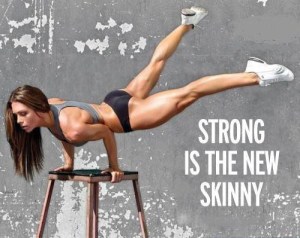
If you’re curvy, they’ll find something wrong with you.  If you’re skinny, they’ll find something wrong with you.  If you’re muscular, they’ll find something wrong with you.  We just cannot seem to catch a break.

I have come to realize the only way to win at a game specifically rigged to see you lose, is to walk off the field.  Removing oneself from the equation. I’m going to keep lifting these weights. I will finally feel just as strong outside as I do inside.  And if they have a problem with me, I welcome them to come say something to my face.

I doubt they will.

‘You mad, bro?’

tweeted once that there was no upside to being a non-white female under 40. Put another way, white men over 40 are unlikely to have had to deal with any of the following situations:

– “Of course they hired you! You’re a poster-child for diversity!
– “Excuse me, when is the tea being served?”
– “I hear you on this, but…”
– “So when next are you going back to [insert name of Caribbean island that is not actually person’s country of birth or domicile here; if in doubt, default to Jamaica]”
– “You should be grateful that…”

Etc.

Yet the most frustrating/soul-destroying part of the non-white female under 40 triumvirate is contending with the angryblackwoman stereotype. A stereotype that means any opinion, any dissenting viewpoint, any suggestion, any email, any comment, any expression at all – no matter how innocuous – by members of this cadre risks being interpreted as “disrespectful”, “rude”, “cold”, “combative”, “non-cooperative” or the ever-popular, “hostile”.

This in addition to the adjectives commonly applied to women who lead or manage – all of which may be summed up in another word: “bitch”.

And in addition to bodies of research that show, definitively, that women are penalized for speaking up or appearing to be ambitious, for asking for salary increases.

(Then, of course, there’s the other end of the gaslighting spectrum: “You’re so sensitive. You’re so emotional. You’re defensive.” Further excellent reading, featuring the oft-forgotten observation that ‘privilege is revealed more clearly to those who don’t have it’ from Hugo Schwyzer, here)

To quote a  commenter at the Atlantic (in the context of a particularly infuriating piece on Michelle Obama):

Imagine if every time you said anything, someone said “you mad, bro?” I imagine being a powerful black woman involves pretty continuous trolling of that sort.

Because, yes, exactly.


A version of this piece first appeared in the Galavant Times.

Maybe I am my hair

This post first appeared at The Liming House on July 16 2008

(Pace India.Arie)

I started growing my locs five years ago. Since then, I’ve fielded a host of questions from friendsfamilyclassmatescolleaguesrandomstrangers, including but not limited to:

– Do you wash it?

– How do you wash it?

– Can I touch it?

– Does it itch?

– Is it real?

– Does it hurt?

– Don’t you miss your real hair?

– Are you a Rasta?

– Why did you do it?

Continue reading